Reframing valuation as proactive planning, not a last-minute hurdle
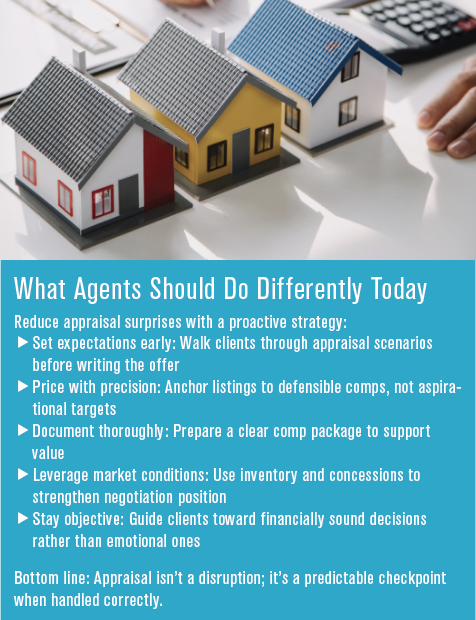
In today’s payment-sensitive real estate market, appraisal strategy has become an essential part of protecting the deal. As buyers focus more closely on monthly affordability, agents need to prepare for valuation questions, appraisal gaps and negotiation scenarios long before the report arrives.
Why Appraisal Pressure Is Rising in Today’s Market
In a market shaped by higher interest rates and increased inventory, buyers are more cautious and more sensitive to overpaying. At the same time, lingering pricing expectations from the pandemic era can create disconnects between list price and true market value.
Jen DeBough, CRS, sales agent at SERHANT in Las Vegas, Nevada, notes that appraisal gaps are appearing more frequently in this environment, particularly when homes are priced aggressively without strong comparable support. Still, she emphasizes that many issues can be avoided up front with the right appraisal strategy.
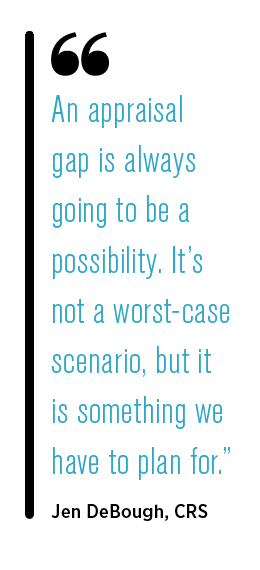
“If you do your due diligence as an agent, you don’t come across it as often,” she explains. “If the home isn’t priced close to fair market value, you’re wasting everyone’s time.”
Preparing the Property File
Strong appraisal outcomes begin with preparation. That means more than pulling a few recent sales. It requires a well-supported pricing strategy grounded in relevant, defensible comparables.
Agents should:
- Analyze recent comparable sales within a tight geographic and time radius
- Adjust for differences in upgrades, lot features and condition
- Anticipate subjective elements like views, location and amenities
Appraisals are not purely formulaic. While data drives the process, interpretation still plays a role.
“Appraisals are subjective,” DeBough says. “Not every appraiser is going to place the same value on a property.”
That variability makes a prepared appraisal strategy essential, not optional.
Agents can also strengthen outcomes by sourcing off-market or recently closed comparables through tax records, ensuring appraisers have the most complete and current data available.
Structuring Appraisal Gap Conversations
The most effective appraisal strategy starts before an offer is even written, properly setting expectations.
DeBough prepares every client for three potential outcomes:
- The buyer covers the gap
- The parties renegotiate
- The buyer exits during due diligence
In one recent transaction, her client went under contract at $605,000. The appraisal came in at $599,000. Because expectations had already been set, the path forward was clear.
“We renegotiated, and the seller agreed to the appraised value,” she says. “It was smooth because the expectations were set from the beginning.”
In today’s market, she often advises against covering appraisal gaps, especially when buyers are already financially stretched and inventory provides leverage.
Strategic Takeaway
In a payment-driven market, appraisal is no longer a back-end hurdle; it’s a front-end strategy.
Agents who anticipate valuation outcomes, prepare supporting data and guide clients through scenarios can transform a common risk into a controlled, manageable process.
Preparation doesn’t eliminate appraisal gaps, but it ensures they never come as a surprise.