
A data-driven look at 2026 housing market trends, affordability pressures, technology adoption, and what real estate professionals need to know.
As 2026 begins, the data tells a complex, at times contradictory, story. Searches for help with mortgage, eco-friendly homes, and AI tools for real estate agents surged in the final quarter of 2025, reflecting a market shaped not only by economic forces, but by rapidly evolving consumer expectations. Buyers are more informed than ever. Sellers are cautious. Agents are being asked to interpret a growing volume of data, technology and policy change, often all at once.
Consumer search behavior has become one of the clearest indicators of real estate market trends heading into 2026. What emerges is not a single dominant trend, but a layered landscape where affordability pressures, technological acceleration, sustainability considerations and renewed demand for human guidance intersect. In 2026, success will depend less on predicting the market and more on helping clients navigate it with confidence.
Reading the Signals
Consumer search behavior continues to provide one of the clearest signals of where the market is headed. The sharp rise in searches for mortgage assistance reflects ongoing affordability concerns, while interest in AI tools underscores agents’ efforts to manage complexity and scale their businesses more efficiently.
At the same time, sustainability-related searches remain elevated, though buyer engagement with green features varies widely by region, price point and insurance environment. Together, these patterns suggest a market that is cautious, curious and increasingly self-directed.
Buyers are arriving at the table better prepared and less patient. According to John Petkanas, CRS, a longtime broker and market analyst in Anna Maria, Florida, that shift is already changing behavior. “Mortgage demand is up nearly 30 percent nationwide, and refinances are up more than 40 percent,” he says. “More importantly, people have adapted psychologically to rates in the six percent range. The rate-lock mindset that froze the market before is breaking.”
That adjustment is significant. “You’re looking at millions of additional households qualifying for mortgages compared to a year ago,” Petkanas says. “When that happens, activity builds on itself. It’s a snowball effect.”
Affordability: Still the Defining Challenge
Affordability remains the central issue shaping the 2026 housing market, but the conversation is becoming more nuanced. While interest rates continue to dominate headlines, buyers and agents alike are recognizing that affordability is influenced by a broader set of variables, including inventory, wages, insurance costs, taxes and long-term ownership expenses.
In many markets, buyers are no longer waiting for dramatic rate cuts. “People are starting to accept that six percent may be the new normal,” says Rob Brooks, CRS, broker-owner in Fort Walton Beach, Florida. “Waiting for rates to fall back to three percent could mean waiting indefinitely, and life doesn’t stop while you wait.”
That acceptance is beginning to move buyers off the sidelines, even as inventory remains constrained. Margaret Rome, CRS, broker-owner of HomeRome Realty in Baltimore, Maryland, says guiding clients through realistic entry points has become essential. “I encourage buyers to slow down,” she says. “Look at homes that have fallen out of contract or need cosmetic work. If the structure is sound, those properties can offer a smart path into ownership.”
In practice, affordability conversations in 2026 most often involve:
- Acceptance of a new interest-rate baseline as buyers adjust expectations around six percent mortgages
- Creative entry strategies such as renovation loans, cosmetic fixer-uppers and relisted or fallen-through properties
- Increased focus on total monthly ownership costs, including insurance, taxes, HOA fees and maintenance
- Inventory-driven compromises on size, location or amenities
- Greater need for emotional guidance tied to life-stage decisions
As Rome notes, affordability is not just a math problem. “I want buyers to feel proud of their homes,” she says. “It should be something they’re happy to live in and confident they could sell again someday.”
 Policy and Regulatory Changes
Beyond purchase price and interest rates, policy and insurance dynamics are playing an increasingly important role in buyer decision-making. In states like Florida, insurance volatility has become a major consideration, influencing not just affordability, but confidence.
Petkanas points to recent stabilization in insurance markets as a meaningful indicator of change. “After sharp increases, we’re starting to see insurance costs come back toward reality,” he says, citing increased competition among carriers and improved building standards. “That matters. Insurance is part of the monthly payment, whether buyers like it or not.”
Policy discussions around tax relief, capital gains thresholds and homeowner association governance are also shaping sentiment. While outcomes vary by state, agents are increasingly being asked to explain how proposed changes could affect both short- and long-term ownership costs.
Understanding policy is no longer optional. It’s essential to guiding clients in a market where headlines can move behavior as quickly as fundamentals.
Technology Integration: From Buzzword to Backbone
Few topics generate as much conversation as artificial intelligence, but in 2026, the role of technology is becoming more grounded and practical. Agents are no longer experimenting with AI out of curiosity; they are integrating it into daily workflows to save time, improve accuracy and meet rising client expectations. But it is not replacing professional judgment.
Jeffrey Decatur, CRS, New York RRC State President 2026 and associate broker with RE/MAX Capital in Albany, New York, cautions against overreliance on AI. “AI is a fantastic tool, but it’s not entirely in tune with local real estate or fair housing, providing generalized answers in a business that’s incredibly local,” he explains.
“AI isn’t about taking over the agent’s role,” says Marki Lemons-Ryhal, CRS, global keynote speaker and chief technology officer at EXIT Strategy Realty in Chicago, Illinois. “It’s about leverage. It allows agents to do more of what they do best.”
At the same time, consumer expectations around transparency remain high. Rob Brooks, CRS, broker-owner in Fort Walton Beach, Florida, notes that clients want clarity about how technology is used. “Buyers don’t mind agents using AI,” he says. “They just want to know when they’re talking to a human. Trust doesn’t disappear just because technology improves.”
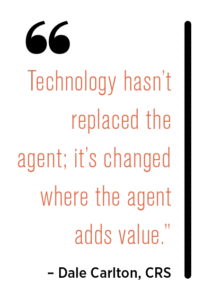
As Dale Carlton, CRS certified instructor, former national president of RRC and longtime broker in Fayetteville, Arkansas, puts it: “Technology hasn’t replaced the agent; it’s changed where the agent adds value.”
Sustainability: A Factor, Not a Fix-All
Sustainability and energy efficiency continue to influence housing conversations, but their impact is uneven. In some markets, buyers actively seek energy-efficient features and lower operating costs. In others, affordability, insurance and maintenance concerns take precedence.
“Eco-friendly homes sound appealing,” Brooks says, “but in many cases, they’re far down the priority list once buyers start focusing on monthly payments and long-term upkeep.”
Petkanas suggests that sustainability’s greatest influence may lie in construction rather than in consumer checklists. Builders are exploring faster, more efficient materials and methods to balance durability, cost and environmental considerations. Over time, those changes may reshape inventory more subtly than headline-grabbing features ever could.
For agents, the challenge is balance: understanding green features, acknowledging trade-offs and communicating value without overselling benefits.
The Shifting Center of Gravity
Demographic change continues to reshape the market. Baby boomers remain active participants, but Gen X, millennials and Gen Z are stepping in with different expectations around flexibility, technology and lifestyle.
A massive wealth transfer is underway, and its effects are only beginning to be felt. “The capital isn’t leaving the market,” Petkanas says. “It’s changing hands.” That transition is expected to drive activity across price points and property types over the coming years.
These generational shifts reinforce the need for agents who can adapt communication styles, technology use and service models to meet clients where they are.
The Return and Reinforcement of Human-First Service
Ironically, as technology becomes more embedded in real estate, the value of human expertise is increasing. Clients may arrive with AI-generated summaries, automated valuations and national data, but they still rely on agents to interpret nuance, manage emotion and advocate on their behalf.
Rome puts it simply: “People want someone who’s looking out for them, not just trying to close a sale.”
Looking Ahead
In 2026, empathy, education and clear communication are essential. The agents who succeed will be those who stay informed, adapt thoughtfully and guide clients with confidence through uncertainty.