
Affordability pressures are changing the way buyers shop for homes. As Google searches for “2-1 buydown” surge, real estate professionals have an opportunity to turn uncertainty about mortgage rates into practical solutions. A 2-1 buydown is one of the most effective tools agents can use to help buyers manage payments and move forward with confidence in today’s market.
A 2-1 buydown is a temporary interest rate reduction that lowers the buyer’s rate by two percentage points in the first year and one percentage point in the second year, before adjusting to the full fixed rate in the third year. The cost is typically paid by the seller or builder as part of negotiations, rather than absorbed by the buyer.
Steve Rath, CRS, broker-owner of Rath Real Estate in Roseville, California, sees buydowns as a practical alternative to price cuts. “Instead of working on price, we work on the buydown. It’s an easier sell to the seller because it directly helps the buyer qualify and feel comfortable with the payment,” he says.
How a 2-1 Buydown Works
For agents, clarity is essential. Buyers don’t need mortgage theory; they need to understand how their payment changes over time.
“The way I explain it is that your payment will be lower the first year, go up a bit the second year, and then land at the full rate in year three,” Rath says. “You just have to know that going in and be prepared for it.”
That straightforward framing helps buyers focus on cash flow during the transition into homeownership, rather than being stalled by interest-rate headlines.
Who Benefits Most from a 2-1 Buydown:
- Budget-conscious or first-time buyers who can manage long-term payments but need short-term relief
- Buyers stretching into stronger neighborhoods with better long-term appreciation
- Markets that have shifted toward balance, where sellers are open to concessions but hesitant to reduce price
John Petkanas, CRS candidate, with RE/MAX Alliance Group in Anna Maria, Florida, notes that buydowns often outperform price reductions for both parties. “The knee-jerk reaction is always to lower the price, but smart sellers look for ways to help facilitate the deal without eroding value.”
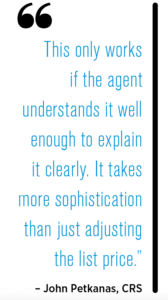 For higher-priced homes, a seller-funded buydown can cost roughly the same as a modest price concession, while delivering a far greater impact on the buyer’s monthly payment, often saving thousands in the first year alone.
Shifting the Conversation: Payments, Not Panic
One of the strongest advantages of a 2-1 buydown is how it reframes the conversation. Interest rates can feel abstract and intimidating, while monthly payments are concrete and easier for buyers to understand.
Rath walks buyers through real scenarios, comparing payments at today’s rate with and without a buydown. “Once they see the payment difference,” he says, “they understand how they can buy the home they actually want, not just the one the rate headlines say they should settle for.”
For sellers, the framing shifts as well. Petkanas points out that builders have long used buydowns as a marketing tool. Instead of dropping the price, sellers are offering something immediate and tangible that directly addresses buyer hesitation.
Equity, Education, and Expectations
Petkanas also highlights a benefit agents sometimes overlook: equity. By keeping the purchase price intact and funding the buydown instead, buyers retain stronger equity from day one. At the same time, sellers may benefit from tax advantages compared to a straight price reduction.
Both Rath and Petkanas stress that buydowns require education and realistic expectations. Successful use depends on close coordination with lenders, clear side-by-side payment visuals, and transparency about what happens in year three. Agents should avoid overpromising future refinancing opportunities; buyers must be comfortable with the full payment if rates do not decline.
In a market where hesitation is common, tools that restore confidence matter. Used thoughtfully, a 2-1 buydown allows agents to turn mortgage math into motivation, helping buyers focus on payments, lifestyle, and long-term opportunity rather than fear-driven headlines. It’s more than a financing strategy; it’s a conversation reset that keeps deals moving forward.