The most successful open houses don’t end when visitors leave—they create neighborhood credibility and future business opportunities.
Productive fall open houses should accomplish more than showcasing a single listing. It should strengthen an agent’s reputation in the neighborhood, generate meaningful conversations, uncover buyer motivations and create a pipeline of future opportunities.
For Tiffany Balanoff, CRS, a licensed real estate salesperson with Douglas Elliman Real Estate in Rockville Centre, New York, every open house is an opportunity to market not only the property, but also her expertise and approach to serving clients.
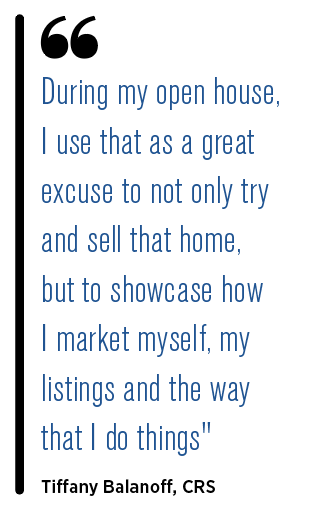
“During my open house, I use that as a great excuse to not only try and sell that home, but to showcase how I market myself, my listings and the way that I do things,” she says. “I am there to show how I advertise.”
Think Beyond the Listing
Long before visitors arrive, Balanoff begins building neighborhood awareness.
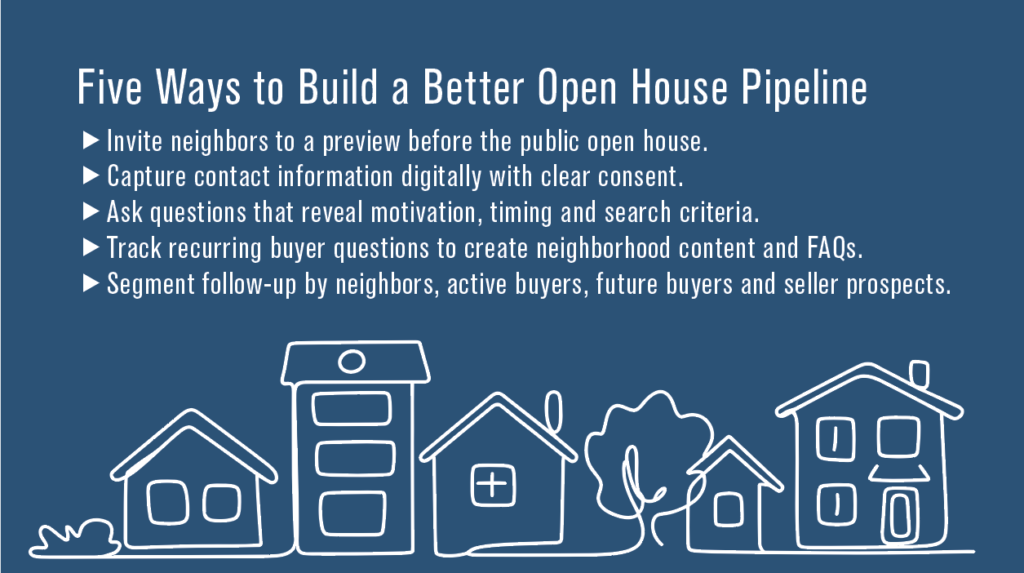
A few days before the open house, she hand-delivers invitations to nearby homeowners for a neighbors-only preview. Beyond encouraging attendance, the conversations introduce her to residents who may become future sellers or recommend the property to friends and family interested in moving nearby.
Throughout the event, she continues reinforcing her local expertise with neighborhood guides highlighting favorite restaurants, attractions and amenities. Those same questions from visitors often reveal what buyers value most in that particular micro-market.
When discussing neighborhoods, Balanoff focuses on objective information such as proximity to transportation, shopping and other amenities while encouraging buyers to conduct their own research on schools and community characteristics that best meet their needs.
Capture Better Information
For Balanoff, collecting contact information is only the beginning.
She moved her digital sign-in process outside the home after realizing visitors sometimes left before reaching a traditional sign-in sheet. Guests scan a QR code on their own phones before entering, receive required disclosures electronically and understand exactly how their information will be used. She also honors requests from visitors who prefer not to receive future marketing communications.
The conversations that follow are even more valuable.
Rather than leading with “Are you working with an agent?” Balanoff looks for natural opportunities to learn about visitors’ timelines and goals. “My sign-in system already asks them if they are being represented. It’s more about making a connection with those people than trying to win an appointment. I’m here to serve people, not sell them,” she says.
Turn Every Open House Into Future Business
The work continues after the event ends.
Visitors automatically receive listing information and disclosures, followed by personalized emails, texts or phone calls based on their preferences and any questions raised during the open house.
Balanoff also tracks attendance, weather conditions and buyer questions over time to identify patterns that improve future events. She has even found that rainy days often produce stronger attendance in her market, insights that help guide conversations with sellers about whether to cancel an open house.
By treating every interaction as an opportunity to build trust, not simply generate a sale, agents leave with far more than a sign-in sheet. They gain neighborhood insights, stronger relationships and a CRM filled with contacts who can be thoughtfully segmented into buyers, sellers, neighbors and future referral opportunities.