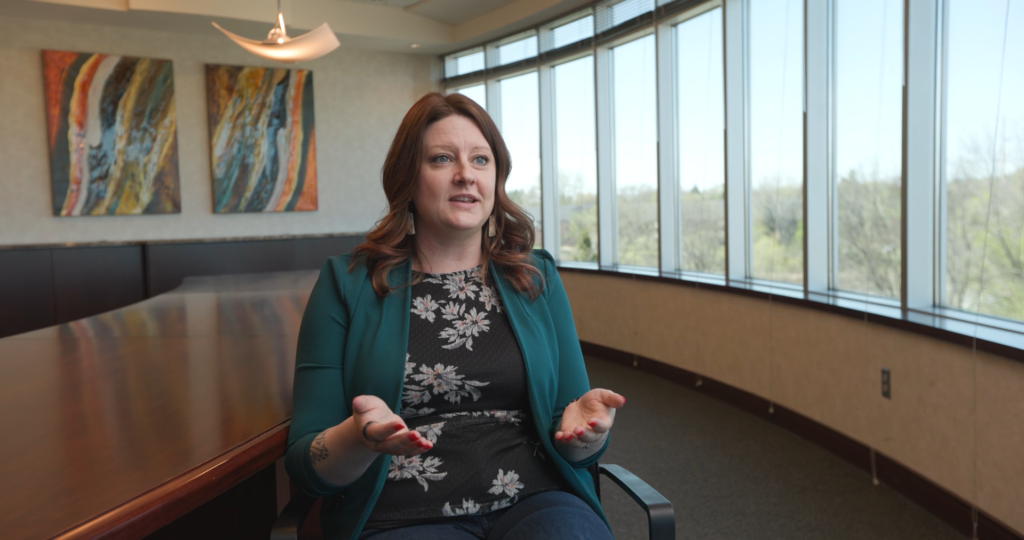
For Erin Koch, CRS, earning the Certified Residential Specialist Designation was more than a professional milestone—it opened the door to advanced education, a global network of top-producing agents and new opportunities to better serve her clients. In this Q&A, she shares how CRS has strengthened her business, helped her stand out in a competitive industry and reinforced the value of relationships, consistency and continuous learning.
What has earning the CRS designation meant to you, and what opportunities has it created?
Achieving the CRS designation was validating for me because the RRC places a real emphasis on education, continuing to level up, and growing. Through that, I have had some awesome opportunities to network with agents not only across the United States, but around the world.
At Sell-a-bration this year, the annual conference hosted by the RRC, I met agents from Spain, which was so much fun. I have also made connections with leaders at our local associations. As the education coordinator, connecting with national speakers has been especially exciting, and we often get the inside scoop on upcoming events and new opportunities.
We recently completed a divorce certification class and advanced-level artificial intelligence training. As an education junkie, I love that I get to keep learning and growing, then share that knowledge with other agents. That has facilitated some really interesting conversations.
What surprised you most while earning the CRS designation?
The biggest surprise for me was the depth and breadth of the education. A lot of brokerages offer free education, which is great, and many associations also provide really good education. What I love about RRC and CRS classes is that they are usually more niche and go well beyond the surface level.
For example, we recently completed a divorce certification class focused on creating a smooth transaction in a high-conflict, high-stress, highly emotional situation. It gave us so many tips, tools, and techniques we could implement. I was able to use something from the class in a transaction later that same day, which was fabulous.
The AI classes are advanced, too. Instead of covering only how to log in or what types of prompts to ask, they go deeper. That depth is what sets the education apart from surface-level, beginner training.
How does the CRS designation help you stand out in a competitive real estate market?
One of the ways the CRS designation helps me stand out is through the connections I have built with other agents. At events and continuing education classes, we network with other professionals. When you have a personal connection with another agent, you may hear about off-market properties or gain a little edge when competing in a multiple-offer situation.
Those agents know you personally, understand how you operate, and recognize that you are a serious professional, not a fly-by-night part-timer. That credibility can help give your client a competitive advantage and, in some cases, help win an offer.
The CRS designation gives you an advantage simply by putting you in the same room as other top producers.
What advice would you give an agent who is considering earning the CRS designation?
First of all, I highly recommend it. It is a great designation, the master’s degree of our industry.
Start slowly, and do not assume you need years and years of experience before you begin. You do need some transactions and experience, but start taking the classes right away. Get involved with your state chapter, meet agents, and surround yourself with those people. The more you put yourself in rooms with top producers, the more you will start to think like a top producer.
What should a new agent focus on during the first six months of a real estate career?
Pick one or two things you want to try and give them a real chance. Real estate is an industry full of distractions, so choose one or two activities, such as open houses, social media, pop-bys, or farming a neighborhood, and stick with them.
Give your approach about six months, then reassess. Review what is working and decide whether to continue or pivot. We are constantly presented with things that are supposed to be shortcuts, but there are no shortcuts.
It is all about people. Meet people, check in with people, and follow up with people. That is the easiest place to start: start with the people.
See more of what our members are sharing on our YouTube page.