In today’s high-rate housing market, assumable loans are becoming a powerful affordability strategy. By helping buyers take over existing FHA or VA mortgages with lower rates, agents can reframe monthly payments, expand purchasing power and create a competitive advantage.
In today’s higher-rate environment, yesterday’s mortgages are becoming today’s most underutilized asset. Assumable loans, particularly FHA and VA mortgages originated during historically low-rate cycles, are giving agents a powerful way to reframe affordability and unlock new demand.
For agents who know how to find and position them, these “legacy loans” can shift the conversation.
As James Nellis II, CRS Certified Instructor with eXp Realty in Alexandria, Virginia, says, the opportunity is about helping buyers “unlock a financial position they couldn’t otherwise access.”
What Are Assumable Loans?
Assumable loans allow a buyer to take over an existing mortgage, including the rate, terms and remaining balance. FHA and VA loans are the most common types and are subject to lender approval.
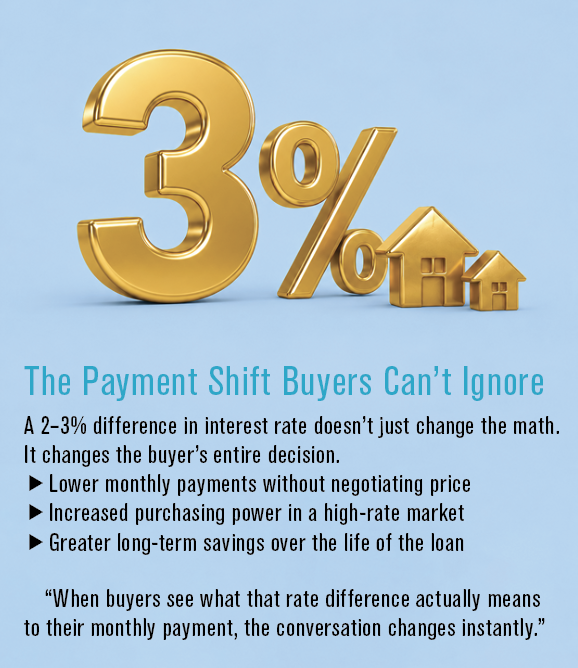
That means a buyer could inherit a 2.25% or 3% interest rate in a market where new loans are significantly higher, lowering payments and increasing purchasing power.
Why They Matter Now
The gap between current rates and legacy loans has created a rare opportunity. According to Nellis, this spread is where leverage lives.
“When you can show a buyer the monthly payment difference tied to that rate, it changes how they evaluate the purchase,” he explains. “It’s not just about price; it’s about affording a more ideal home and even a community that otherwise would be out of reach.”
That difference can mean thousands of dollars per month.
How to Identify Assumable Opportunities
Finding assumable loans requires more diligence, but the payoff is clear. Start by:
- Reviewing property records and MLS remarks for FHA or VA indicators
- Asking listing agents about the loan type, origination date and remaining balance
- Confirming loan terms directly with sellers
- Verifying assumability with the loan servicer early
Nellis advises treating this as a proactive step. “If you’re waiting for a buyer to ask, you’re already behind giving them the market advantage.”
A Seller’s Marketing Advantage
Assumable loans should be positioned as a headline feature, not a footnote:
- Highlight the interest rate in listing descriptions
- Include payment comparisons versus current rates
- Determine if the seller will allow assumption with or without eligibility exchange
- Educate buyer agents so they can communicate the value
Rather than simply stating “assumable loan available,” translate the benefit into real impact.
“Buyers need context,” Nellis says. “If you connect rate to lifestyle, that’s when it resonates.”
Navigating the Challenges
Assumable loans come with complexity, most notably the equity gap, the difference between the loan balance and the purchase price. Buyers must cover this with cash or secondary financing. Other considerations include lender approval timelines, buyer qualification and potential servicing delays.
Still, prepared agents can turn these into advantages. “The agents who win are the ones who set expectations early and guide the process step by step,” Nellis says.
It took years to find the right solution, but Nellis ultimately secured creative financing for his clients. “It is important to find financing to solve for the gap. Not everyone can pay $200,000 to $300,000, given the appreciation gap between the loan balance and the current market value. We found a tool that only requires 10% down.”
For buyers today who want to keep the down payment to zero or less than 5%, they will need to find properties that have not appreciated in value. “It can be difficult for a Virginia buyer who wants to use full eligibility with the benefit of putting zero down on a home. They would need to find a property that has had little to no appreciation since the original purchase with the lower interest rate,” Nellis says.
Strategic Takeaway
Assumable loans are becoming a strategic differentiator. They can expand the buyer pool, increase perceived value and create urgency without reducing price.
More importantly, they shift the conversation from what a home costs to what it feels like to own.
As Nellis puts it, “We’re not just selling homes; we’re engineering opportunities. Rate inheritance is one of the most powerful tools we have right now.”
For agents willing to do the homework, legacy loans are an advantage hiding in plain sight.